2026 Teen Science Trip

When science, education, and a love of the outdoors come together, it could only be the Trinity of teen trips: Ascend's 2026 Teen Science Trip. More than a year in the making, this unique wilderness experience brought together an extraordinary team of scientists, from zoologists/entomologists to botanists, biologists, and lichenologists, creating the ultimate cornucopia of scientific discovery in the heart of Trinity County.

From the moment the pack meeting began on July 5th, excitement was all over the teens' faces. They were eager to hit the trail and immerse themselves in a week of discovery, learning about amphibians, insects, local flora, and lichen in the wild places they call home. First, however, came the minutiae and practicalities. Communal gear was distributed, backpacks were packed, final questions were answered, and everyone headed home for one last night's sleep before the adventure truly began.

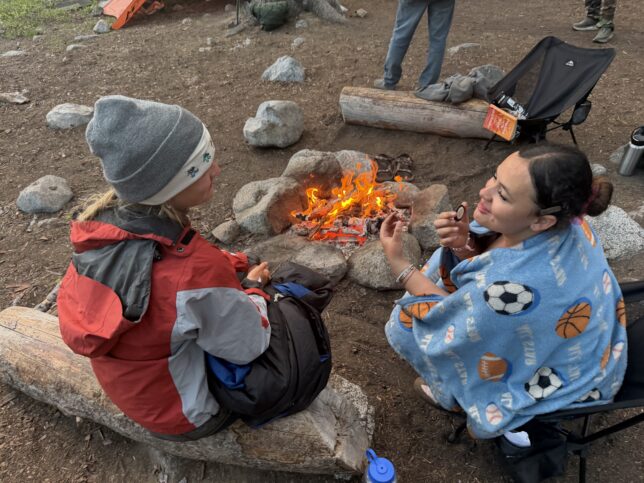
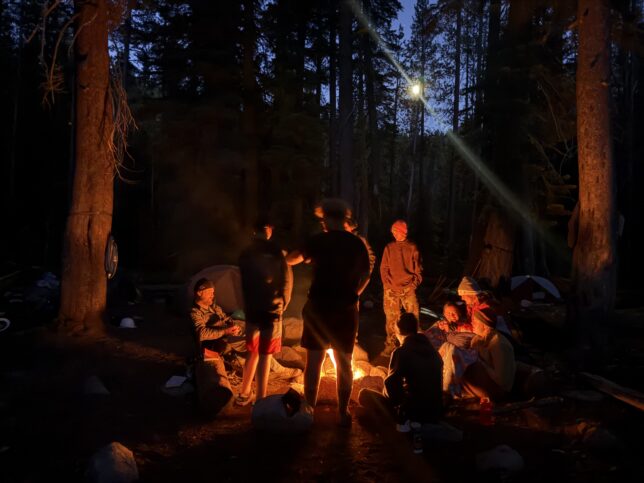
July 6th dawned bright and early. Everyone arrived with backpacks ready and gear in hand. The group loaded into the Ascend van and headed north on Highway 3 toward the Deadfall Lakes, where they would spend the next five days camped in the shadow of Mt. Eddy. Upon arriving at the trailhead, the group's excitement was thicker than the incense cedars lining the trail to the lakes. Waiting to greet them was Jared Dunham, lead entomologist with The Beneficial Insectary in Redding. Armed with his bug net and an encyclopedic wealth of knowledge that flowed as freely as a mountain stream, Jared immediately set the tone for the week. The ambition to get up the trail, establish camp, swim, learn, and immerse themselves in life beyond the bubble of technology was palpable. It almost felt like a race to see who could leave civilization behind the fastest. After arriving at Middle Deadfall Lake, the group selected a campsite on the far end of the lake. With a large and enthusiastic crew, it offered plenty of room while minimizing disturbance to other wilderness visitors, a reminder that stewardship begins with how we share wild places. Once camp was established, everyone cooled off with a swim, enjoyed lunch, and began planning the days ahead. Joining the trip were two undergraduate biology students, Rowan and Landon and two graduate botany students from Cal Poly Humboldt, Annie and Jenni, all eager to share their knowledge and spark curiosity about the remarkable flora and fauna of the Klamath Mountains. That afternoon, Jared unpacked his portable microscope along with a fascinating assortment of insects for everyone to examine. The teens were instantly captivated. Before long, insect traps were placed throughout camp in hopes of capturing the night's tiny wanderers, and a large white sheet illuminated by black lights was stretched between two trees to attract nocturnal insects after dusk. The first day could only be described as a success. Countless facts were shared, questions came without end, and the teens absorbed every lesson like sponges. As dinner filled hungry stomachs and darkness settled over the lake, everyone played group games, then thoughts naturally drifted toward what tomorrow would bring from their sleeping bags. 

July 7th began early as camp stirred to life. Water was gathered, breakfast prepared, and Jared helped the teens collect their tiny nocturnal wanderers before comparing and identifying the previous night's discoveries. Before long, it was time to say goodbye to our zoologist/entomologist and make the short trek to Upper Deadfall Lake. Waiting there was Justin Garwood, a fisheries biologist specializing in herpetology with the California Department of Fish and Wildlife, along with three fellow biologists. The teens were introduced to the team and quickly immersed in one of the Klamath Mountains' most fascinating conservation stories: why non-native brook trout now inhabit many of the region's lakes, how their introduction dramatically altered habitat for the Cascades frog, and what is being done to restore these fragile ecosystems. To date, fewer than two dozen lakes throughout the greater Klamath region have undergone brook trout removal, with remarkable results. Upper Deadfall Lake serves as one such success story. In 2023, surveys found no Cascades frogs in the lake while brook trout were still present. Fish removal efforts began that same year and continued through 2026 until the lake was free of non-native trout. The group split into four smaller teams, each led by one of Justin's biologists. Every team was assigned a different pond, meadow, or wetland to survey for Cascades frogs, salamanders, toads, snakes, other amphibians, and any remaining fish. The teens quickly became field biologists, carefully searching suitable habitat, recording observations, and learning firsthand how wildlife surveys are conducted. By the end of the morning, the teams had documented 13 Cascades frogs along with numerous tadpoles, a promising sign that the population is rebounding following the trout removal. One survey site proved to be a hotspot for garter snakes, while the others revealed encouraging signs that frogs and other amphibians were recolonizing the surrounding wetlands. Justin explained how these connected habitats allow wildlife to disperse naturally, helping maintain healthy and resilient populations across the landscape. After lunch, the group moved on to the day's final project: tagging Cascades frogs for future monitoring. The biologists carefully implanted identification tags in half a dozen frogs while the teens gathered around in quiet anticipation, watching each step of the process. One individual measured an impressive 79 millimeters, making it nearly record-sized for the species. Once the frogs were safely released back into their habitat, the discussions continued as the group made its way back to camp. The afternoon gave way to swimming, relaxed conversation, and a well-earned dinner. Just before sunset, Dr. Eric Peterson arrived at camp. A published lichenologist who now works in river ecology with the Trinity River Restoration Program, his role in the week's scientific journey would unfold the following morning. Before long, stars filled the sky above Mt. Eddy, games were played, and one by one the teens drifted off to sleep, eager for whatever discoveries tomorrow might bring.

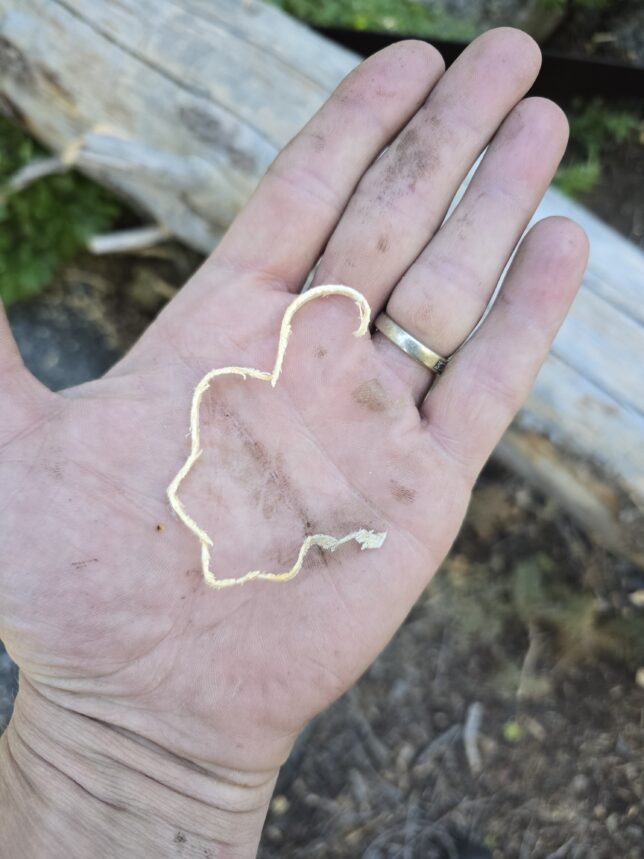
Rare aquatic plant being shared by Botanist, Annie.

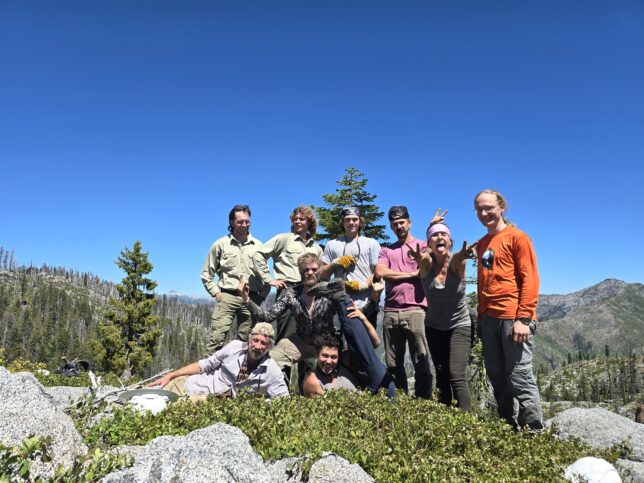
July 8th. Water, breakfast, and conversation filled with curiosity and laughter. By now, camp had settled into a comfortable rhythm, and everyone knew what the day would bring. With Dr. Eric Peterson joining the group, curiosity naturally turned toward a simple question: What is a lichen? The answer, in its simplest form, was that a lichen is a partnership between a fungus and an alga, living together in a remarkable symbiotic relationship. With a very basic understanding of what a lichen is, Dr. Eric let everyone know that they would be summiting Mt. Eddy to study high-elevation lichens, to observe rare alpine plants, and to revisit a long-term project that he had begun years earlier–mapping the size and growth of a fox tail pine near the summit. As the group climbed higher, the mountain became an outdoor classroom. Rare trees and wildflowers were pointed out along the trail, including the whitebark pine, whose seeds are dispersed almost exclusively by the industrious Clark's nutcracker, and the Siskiyou fireweed, despite its name, it is not a true fireweed. Upon reaching the summit, the views captivated everyone. Mt. Shasta dominated the northern horizon, while the Trinity Alps, the Russian Wilderness, and the Marble Mountains stretched away in the West from North to South. A few stubborn patches of snow still clung to the summit, and, in true teenage fashion, several of them mixed snow with the last of their electrolyte packets to make improvised snow cones. Surprisingly, they were pretty good. With Dr. Eric's classroom now fully assembled, he gathered several lichen specimens while the rest of the group explored the summit and rested among the remnants of the long-abandoned fire lookout. Hand lenses and samples were passed around as discussions turned to lichen anatomy, how the fungal and algal partners function together, and how these remarkable organisms survive in one of the harshest environments imaginable at the top of an exposed 9,000-foot mountain. A group photo soon followed before botanists Annie and Jenni led everyone to another remarkable discovery: the Mt. Eddy sky pilot, a rare subspecies of Polemonium found only on and around the summit of Mt. Eddy. Its delicate purple blooms were quite the juxtaposition to the seemingly inhospitable granite landscape surrounding them.From there, the group descended roughly 1,000 feet to the foxtail pine Dr. Eric had come to revisit. There, Jenny explained that her research focuses on the mountain's two dominant high-elevation conifers: the whitebark pine and the foxtail pine. She shared that Mt. Eddy supports the largest grove of foxtail pines in the Klamath Mountains, while a separate subspecies inhabits the highest elevations of the Sierra Nevada. Her work involves monitoring these ancient trees for disease, drought stress, and bark beetle activity, and she spoke passionately about both the trees themselves and the rugged environments they call home.After an engaging discussion beneath the foxtails, the group continued down to Upper Deadfall Lake for one final lesson of the day. There, Annie, an expert in wetland meadows degradation, introduced everyone to Nuttall's quillwort, an unusual aquatic plant that lives entirely submerged and represents one of the oldest surviving lineages of vascular plants, having changed remarkably little over hundreds of millions of years. Its unassuming appearance belies an extraordinary evolutionary history. Returning to camp, the evening concluded with an informal roundtable discussion between the scientists, guides, and teens. Questions ranged from education and career paths to the rewards and challenges of working in the natural sciences. The conversations became surprisingly personal and thoughtful, revealing not only what it takes to become a scientist but why each of them had chosen that path. The discussion was so engaging that everyone agreed it deserved a second roundtable the following evening. As it got darker, games were played, the teens got sleepier, and dreams were had. 

July 9th. The routine was so regular it was happening on autopilot; water, breakfast, and readiness for the day.Before departing, however, he wanted to share one final treasure with the group: the current California champion curl-leaf mountain mahogany growing just off the Pacific Crest Trail. The group headed down the trail to the junction of the PCT before arriving at the remarkable tree. Once everyone surrounded the tree with curiosity and inquiries, the discussion began: Dr. Eric explained that the tree had been nominated as California's champion in 2020 by Michael Kauffmann, noted local author, botanist, and longtime friend of Ascend. But the tree's significance didn't end with its impressive size. Growing quietly upon its branches was one of California's rarest lichens: Stenocybe procrastinata. First described by Dr. Eric himself, the species, earned its name from the extraordinarily long process required to formally describe and publish it, a process that stretched well over a decade. Until that morning, only a handful of people had ever seen the lichen in person. In just a few minutes, thanks to the curiosity of an eager group of teens, that number had nearly doubled. Dr. Eric was ready to depart and Annie was ready to take the group to a meadow to show them another special plant; Darlingtonia californica–the California pitcher plant, Annie’s forte. The show wasn’t just about the pitcher plant, there was another carnivorous plant nearby; Triantha occidentalis or the western false asphodel. With both carnivorous plants in-hand, the show and tell began with Annie cutting open an older withering pitcher plant to show the teens all the accumulated bug parts in the base of the stem, explained how the bugs get trapped inside, and she also showed them the flowering part of the pitcher plant.The asphodel’s unusual carnivorous feeding strategy differed and was only discovered in 2021, in that it has sticky glandular hairs on its stem and draws small insects to get stuck there so that they can be absorbed by the plant’s enzymes. Just as the group prepared to return to the lake for lunch, an unexpected opportunity presented itself. Passing through the area was Dr. Laura Levy, a geology professor at Cal Poly Humboldt specializing in glacial geology and sedimentology. Recognizing Annie and Jenni, she gladly accepted an invitation to speak with the teens about the remarkable landscape surrounding them. Standing among the granite basins of the Deadfall Lakes, Dr. Levy transported the group back through more than 400 million years of geologic history, explaining the repeated advance and retreat of glaciers, the uplift of mountain ranges, and the ancient forests that have come and gone across the landscape through deep time. What began as an impromptu conversation evolved into nearly an hour of captivating storytelling that left everyone looking at the mountains through a completely different lens. After lunch, Annie and Jenny introduced the teens to one final field exercise. In a large flowering meadow near the lake, the group conducted a botanical relevé—a scientific vegetation survey used to document plant diversity and abundance. The teens identified species, estimated vegetation cover, recorded observations, and carefully pressed representative specimens that would later become part of Cal Poly Humboldt's herbarium collection. Throughout the exercise, Annie and Jenny patiently explained each species, transforming what might have seemed like an ordinary meadow into a living catalogue of botanical diversity. With the day's science complete, everyone returned to camp for an afternoon swim, dinner, and one final evening together. The second roundtable discussion naturally followed, with conversations once again drifting from careers and education to life itself. Group games, laughter, and stories carried on well into the evening. This night was different. Knowing it was the final night in the wilderness gave every conversation a little more meaning. Nobody seemed eager to crawl into their sleeping bags. The thought of leaving hung quietly over camp, tempered only by the friendships that had been built and the experiences that would soon become memories. Civilization waited on the other side of morning, but for one last night, the stars above Mt. Eddy belonged entirely to the group.

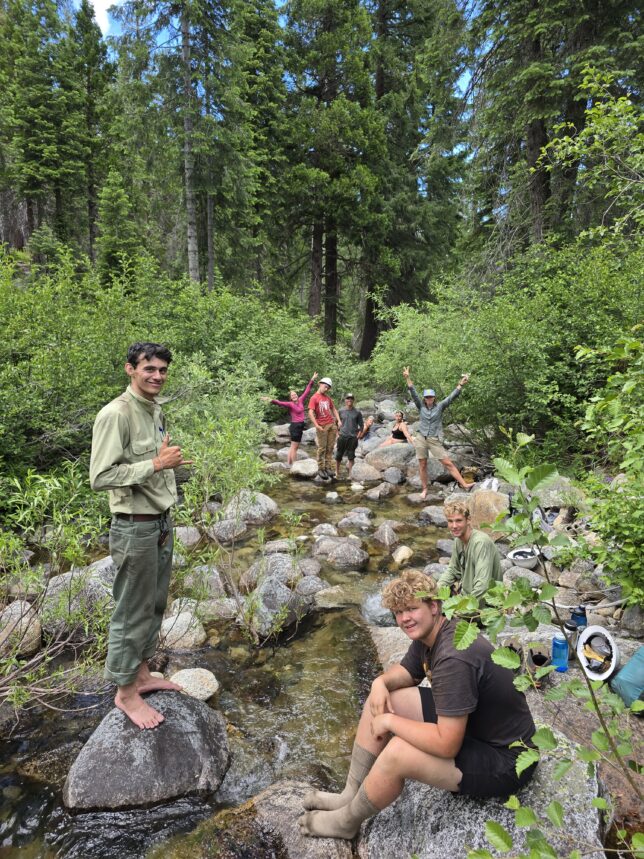
Friends forever
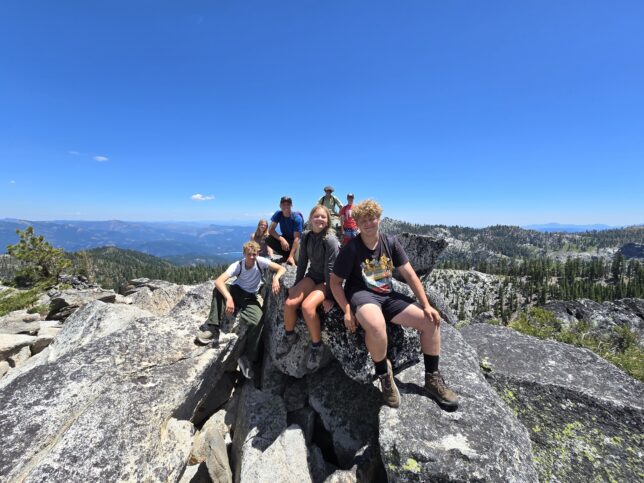
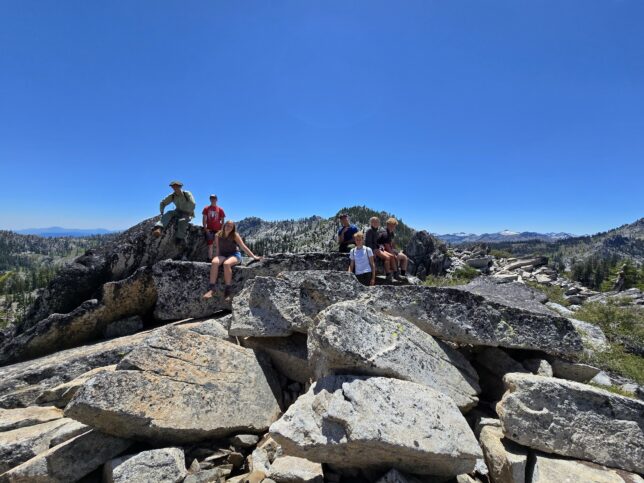
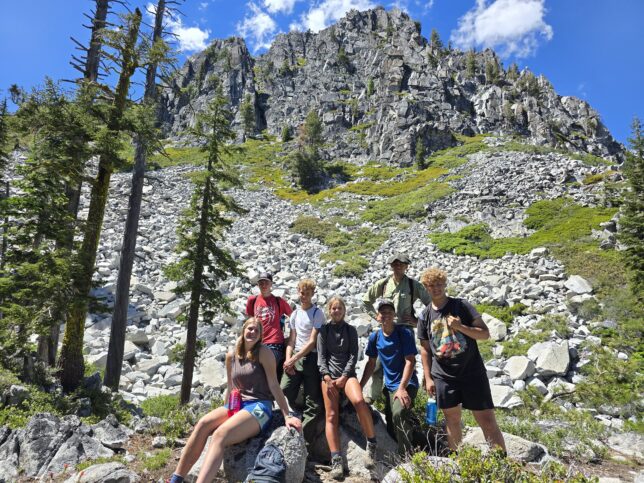
The final photo

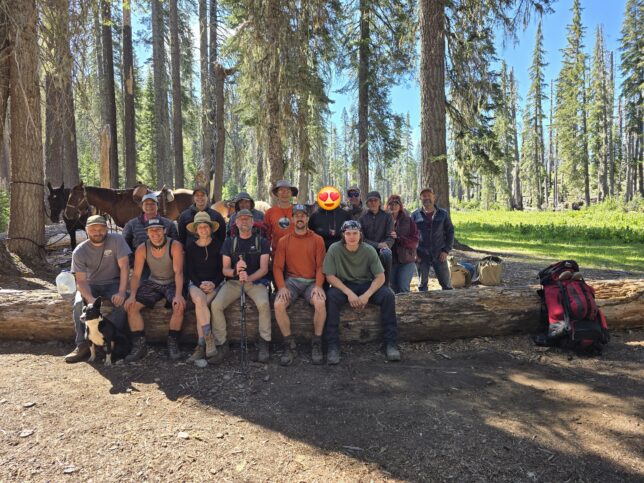
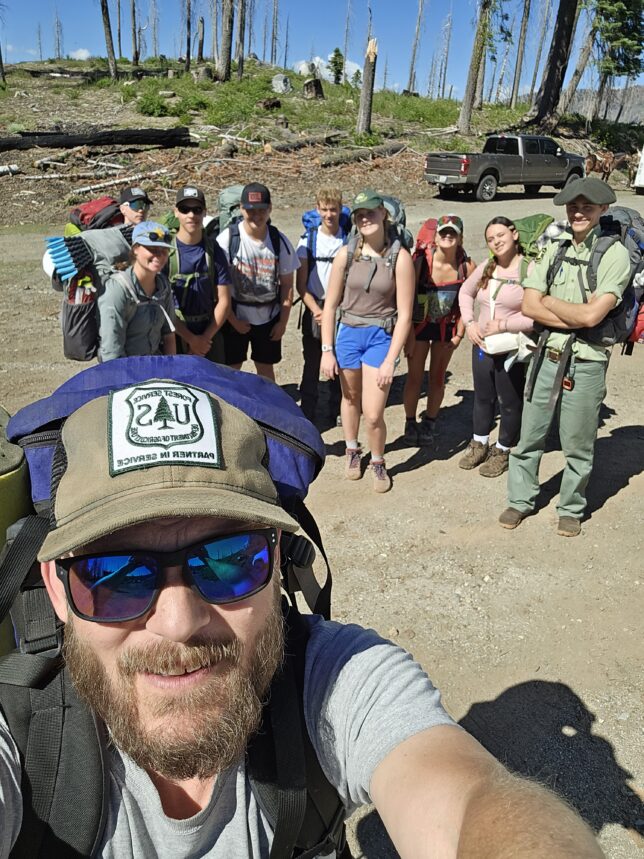
July 10th. The routine unfolded, but this time it was different, it involved packing everything up, packing gear, taking down tents, and dividing up communal items. Reality had set in; the adventure was coming to an end. Once camp was ready to head out, everyone bombed down the trail. I don’t think it even took 45 minutes to get back to the trailhead. With the van loaded, goodbyes to Annie, Jenni, Rowan, and Landon complete, a group photo was in order as a small celebration marking a week well spent. Soon everyone went their separate ways while the teens and guides, Andrew and Zach, made the drive back to Weaverville. Gear was cleaned and put away, followed by the traditional reward of hot sandwiches and ice cream before parents arrived to take their teens home.

The science adventure had come to an end, but something far more important had begun. New friendships had been forged, curiosity had been ignited, and a deeper appreciation for the natural world had taken root. The mountains of Trinity County had once again done what they have always done best: teach those willing to slow down, observe, and wonder. The trip was over, but the memories and perhaps the inspiration for a future scientist or steward of the land, will last a lifetime.
Success with Ascend's Trinity Alps Stewardship Trip

Profound, as cliché as it is, is the word that comes to mind when I think of what happens to teens when they come on an Ascend Wilderness Experience stewardship trip. From the curiosity on day one to the perseverance by the trip’s end, the change and transformation of character is not only visible, but it is also inevitable.

June 20th saw the trip’s pack meeting with the kids arriving on time with readiness in their eyes and the unknown before them; they got all their gear loaded up, packed, and the basics of the trip were explained without incident. The group went their separate ways until the morning.

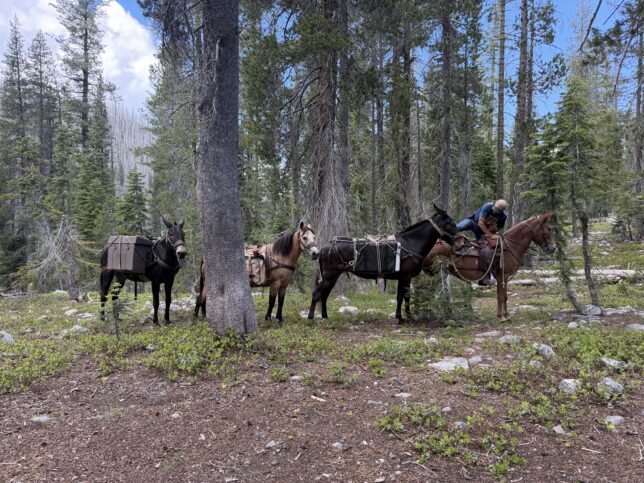
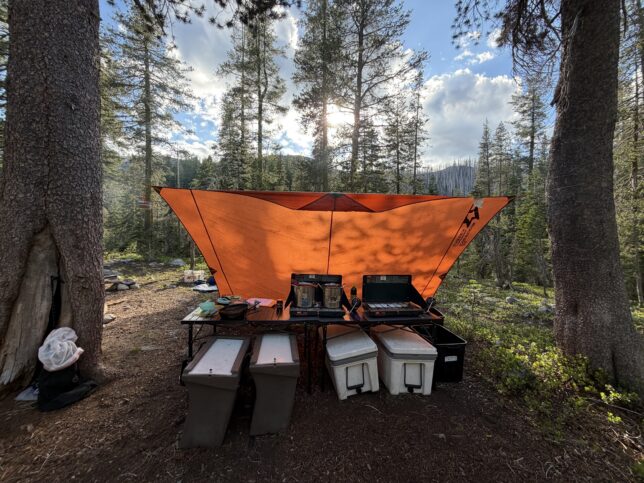
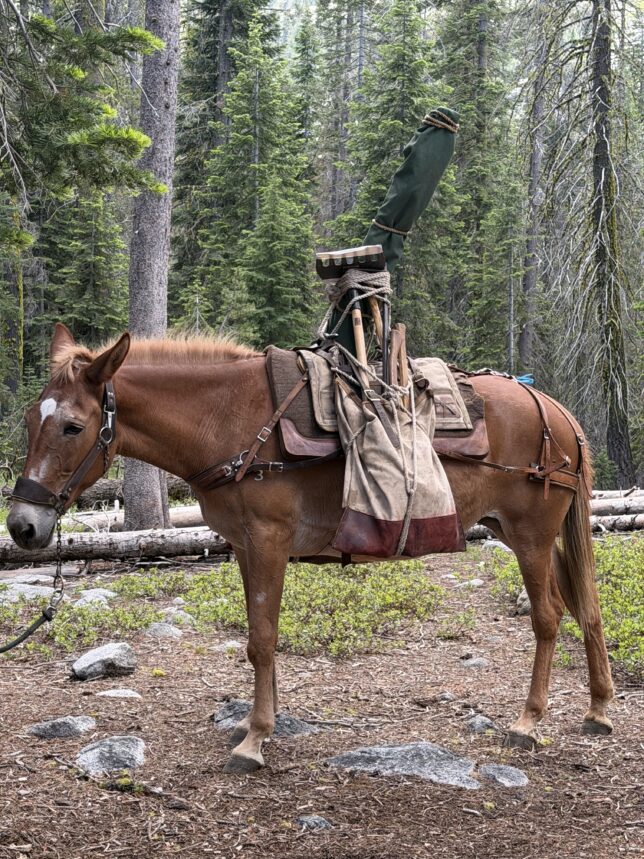
June 21st at 7 am, the journey commenced. USFS representative from Shasta-Trinity, Aidan, joined the teens and guides for the week to incorporate wilderness patrol lessons and to help guide the direction of the trip and team. The guides, the USFS rep, and the teens headed up Highway 3 North to the Boulder Lakes trailhead near Coffee Creek, California. Upon arriving at the trailhead, the teens prepared for the incoming mule team provided by the Back Country Horsemen of America; the mules and volunteers provided the transportation for tools, food, and supplies for the teens in the wilderness area. Without the BCHA, these trips wouldn’t happen; they are a key component in keeping our trail systems open. Upon arrival at the camp, the teens set up their tents and established a defined kitchen area along with a bear hang. The rest of the afternoon was spent setting camp up, gathering firewood, collecting water, and everyone’s favorite, digging a latrine. Once camp was set up, expectations were outlined along with the goals for the trip, which at that time seemed like an impossibility.

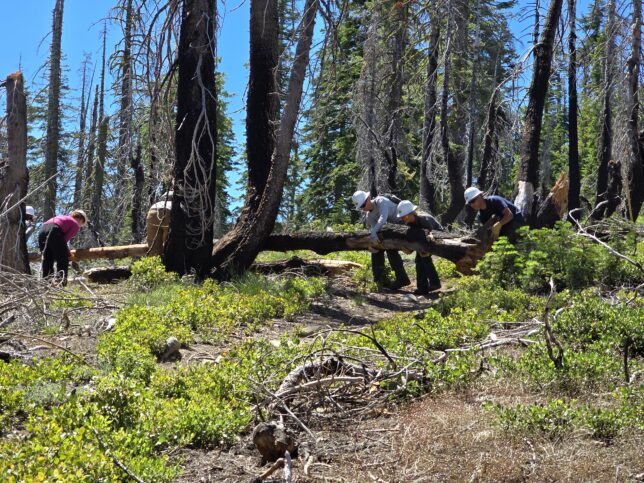
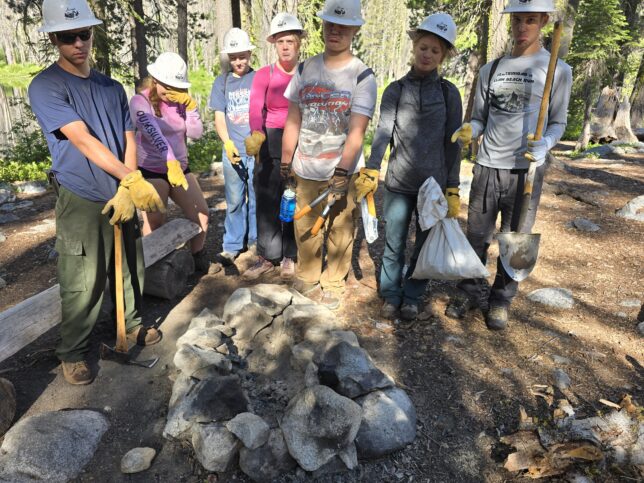
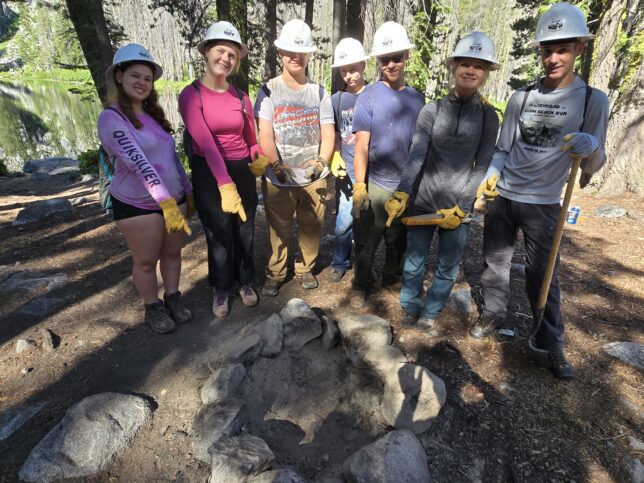
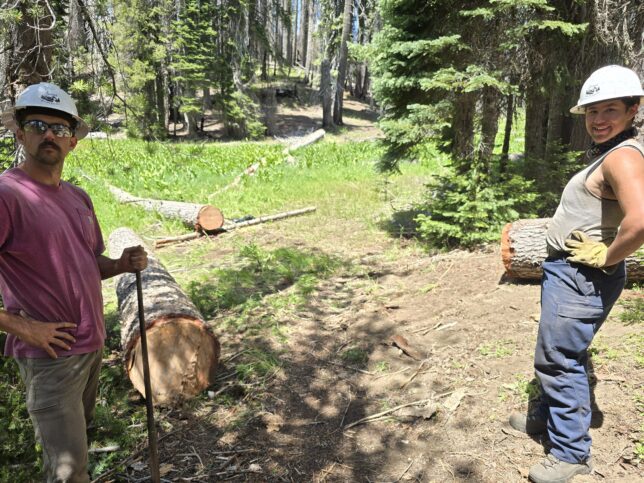
June 22nd, camp was awakened at 6 am for the start of warmth around a burgeoning campfire, leading to warm hot cocoa, coffee, and tea. The breakfast bar was released along with the sandwich bar, hinting that the start of work was near. Once sandwiches for lunch were made, the group naturally gathered in a circle, commencing the morning’s stretch/exercise circle--a tradition that quickly became part of the rhythm of camp. After a brief discussion on what was expected that day and a bit of fitness, the group was ready to embark on a day centered around wilderness patrol duties such as: cleaning campfire rings, deleting improper campsites, collecting garbage, and removing camp “furniture”. This, of course, would result in getting a few logs off the main trail and some swimming too. The team descended onto the campsites around Boulder Lake at first, where they removed ash, garbage, and some residual burnt wood from campsites while also realigning campfire rings and generally making them smaller as per USFS parameters. After removing a very large campfire ring that was in an inappropriate place, the team headed back towards the trailhead to remove a few massive very-in-the-way logs that required numerous people to be pushed off the trail. After removing the logs, the team headed towards Little Boulder Lake to clean more campsites and to dip their proverbial toes in the water. For the second year in a row, a hot bed of coals was found in a campfire ring while the teens were participating in wilderness patrol duties; this year it was at Little Boulder, last year multiple hot campfire rings were found at “Big” Boulder Lake. The coals were sequestered with the use of our safety hard hats and the availability of the lake water while simultaneously teaching a valuable lesson: that only you can prevent a forest fire. Once the worry was out of the way, the team proceeded to swim to their heart’s content while exploring salamanders and rocks to jump from. The hike back was a reminder that the real work is to come, but first, dinner.

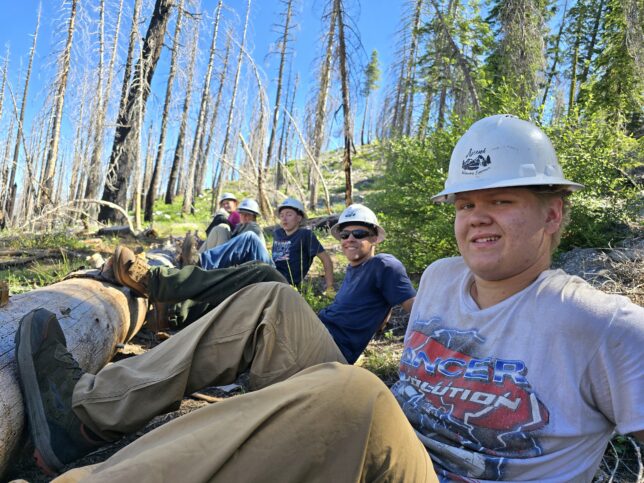
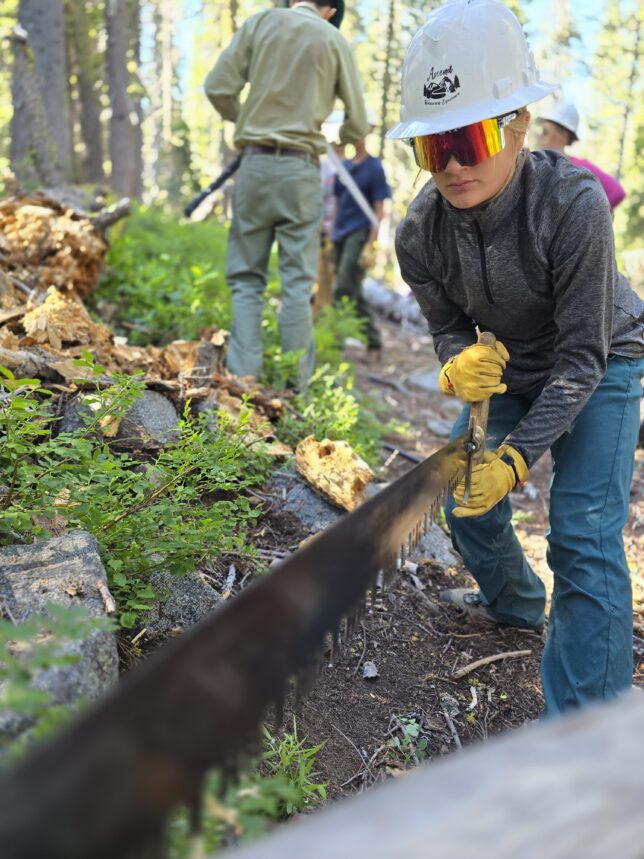
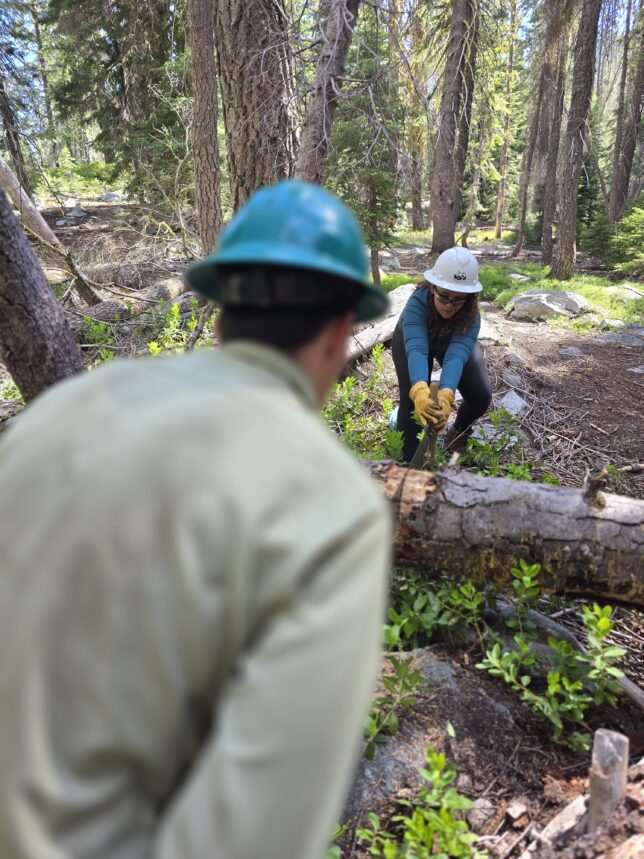
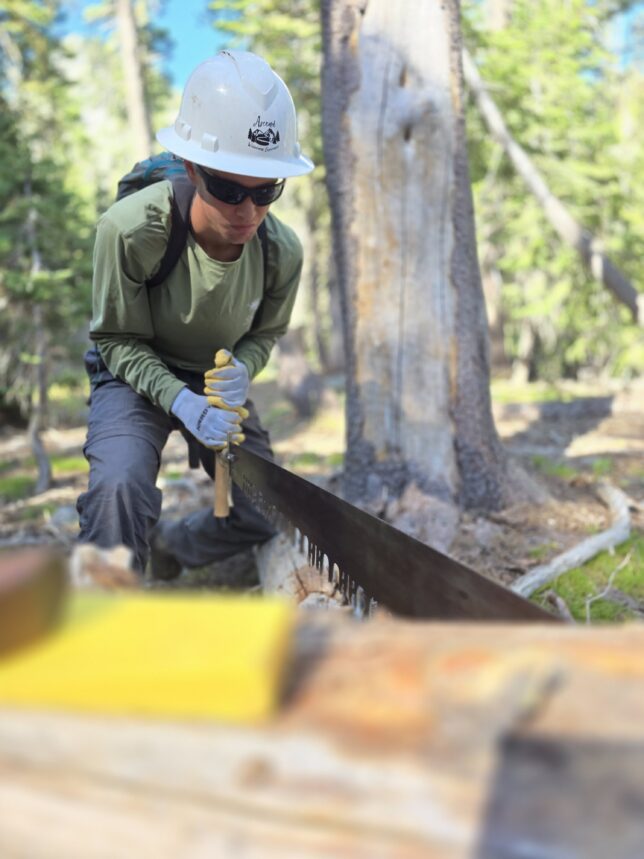
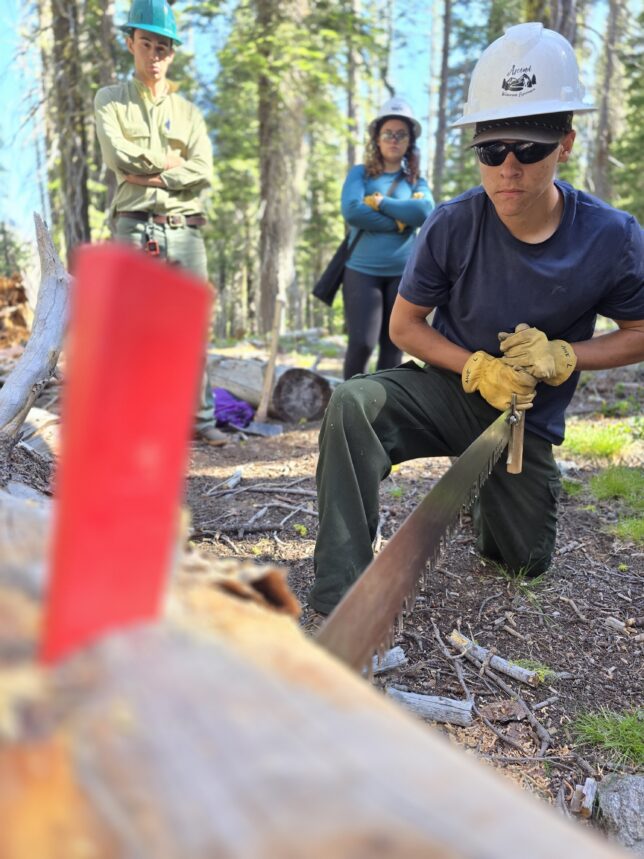
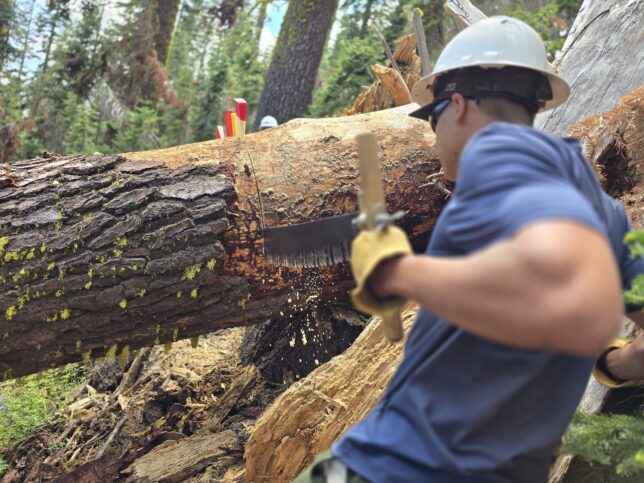
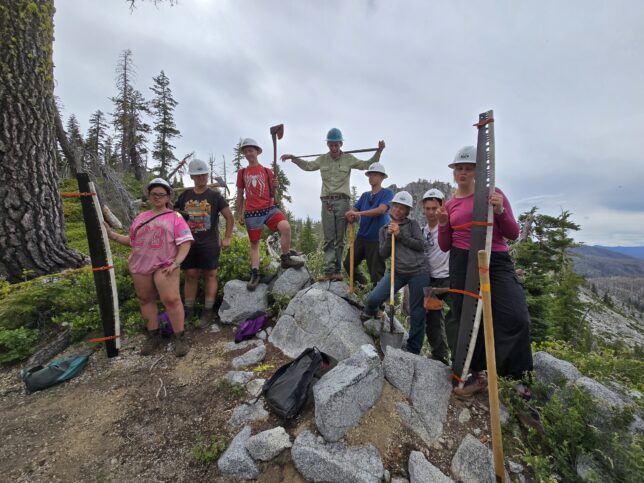
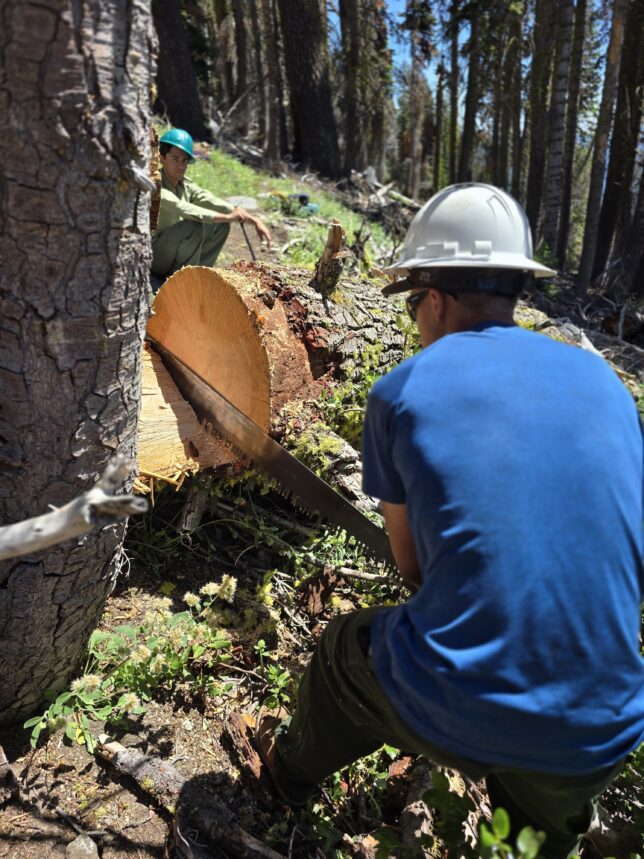
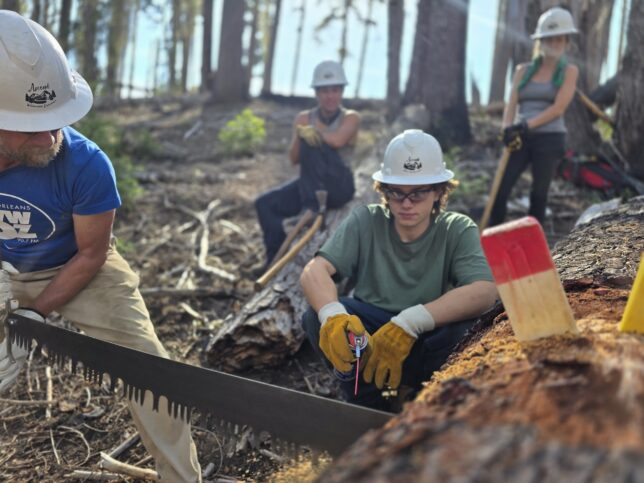
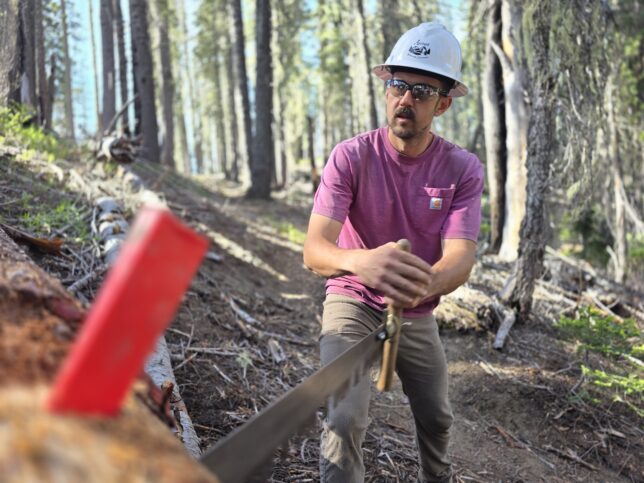
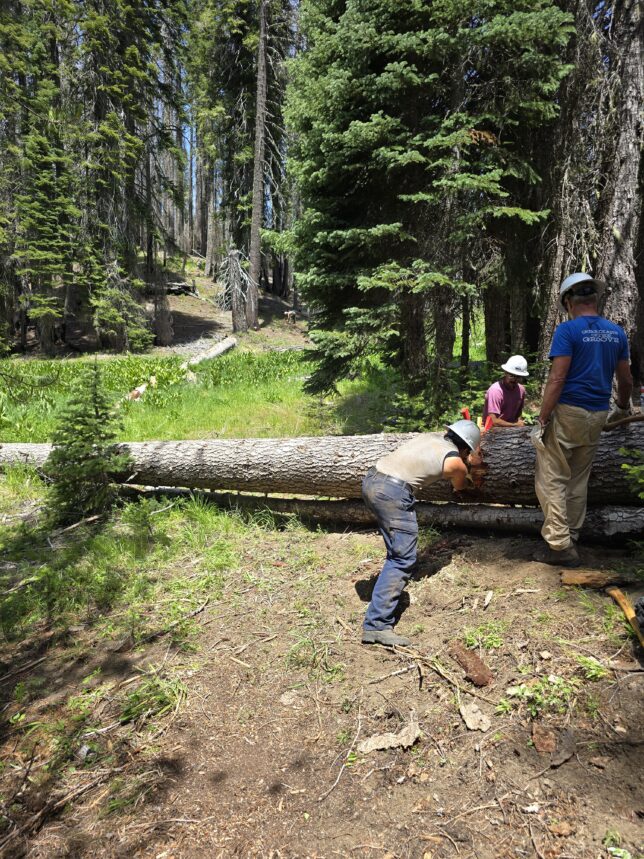
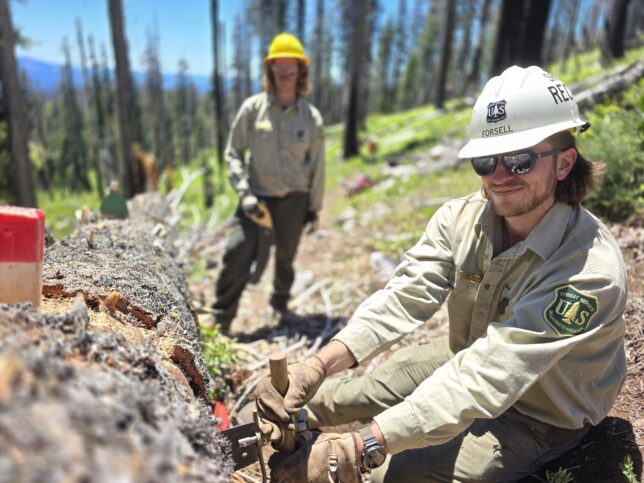
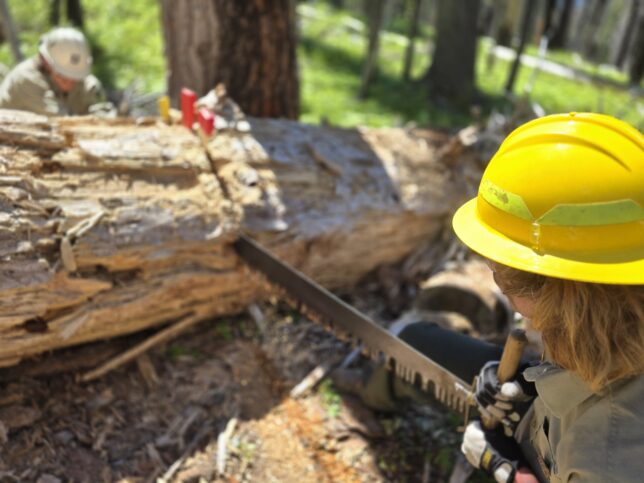
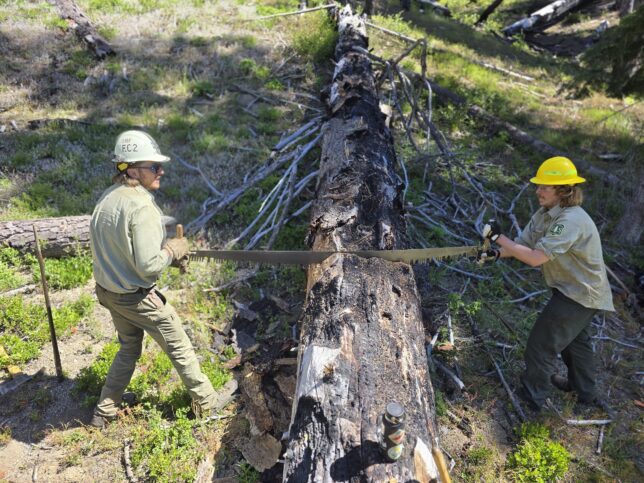
June 23rd breakfast was had, lunches were made, and the exercise circle closed up. The team was ready to head up the Tracey Trail, which connects Boulder Lake to Poison Canyon. It is a historic trail that has the feel of it being built for mules rather than people. It is a steady uphill push that sees about 1000’ in elevation gain in about a mile. The trail had dozens of downed trees over it, requiring the team to de-stobb, which is the removal of branches and stobs from trees to cut and roll them out of the way. Numerous lessons were taught to the teens by the guides about crosscut use, safety, and how to swing an axe and not to swing an axe. The team became cohesive quickly, almost as quickly as the saw ripped the trees apart, opening the trail one step at a time. Upon reaching the Tracey Trail saddle where the trail starts to work into the Poison Canyon trail system, the team had lunch and took in the views of Mt. Shasta and Mt. Lassen in the Cascades. The views into Poison Canyon were hampered by a large Red Fir die-off as a result of a myriad of issues such as mistletoe infections, insect infections, and drought. This didn’t stop the team from completing the goal, which was to finally open the Tracey Trail so that it can tie into the clearing of Poison Canyon this fall on Ascend’s adult stewardship planned for September. The team exhausted their time and energy and stashed the tools so that they could come back on June 25th after their planned day off. Dinner, campfire games, and sleep would be the intro for tomorrow.
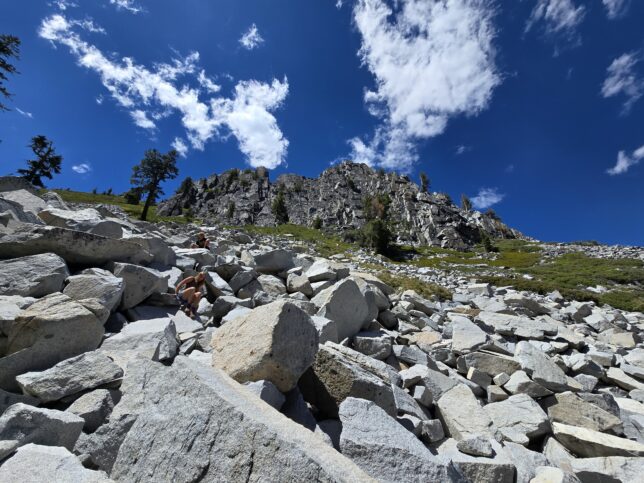
June 24th wasn’t your average work day for the team; in fact, it was anything but. The teens voted to explore Tapie, Lost, and Found Lakes while also exploring an infamous unnamed peak that we call “No-Name Peak”. After breakfast and lunch prep, everyone headed up the granite walls that define Boulder Lake’s backdrop. The first face was about 400’ in elevation and brought the group up to Tapie Lake, a mediocre, burned-out, slightly larger-than-a-pond lake, actually more of a series of small ponds. The group continued up the second granite face, this one more intimidating than the last; with the teens dictating the direction, they casually traversed up, eventually reaching Lost Lake, another slightly disappointing lake that pushed the team to continue onward to Found Lake. Upon arriving at Found Lake, the water was perfect, the lake was beautiful, and swims were made. Everyone was happy. With No-Name Peak in view, the excitement was building, and the teens couldn’t stop talking about the impending views. As everyone dried off and readied themselves for the hike up, the anticipation continued to build. The group followed up a dry spring that led them into the saddle, which is a 7000’ divide fostering Fox Tail pines and views of the inner Alps separating a small meadow-filled draw from Boulder, Tapie, Lost, and Found Lakes. The saddle only fueled the fire to push the group higher upon the granite monolith that is No-Name Peak. The push up only quantifies the difficulty as it requires clambering over boulders, dodging leg-scrubbing manzanita, and a near vertical ascent at the final push. Once everyone was at the top, the views were near 360 with views into the heart of the Alps, Mt. Shasta was sticking out like the sore thumb that it is, and of course to the south Mt. Lassen and the continuation of the Central Valley. After lunch was digested and views were exhausted, everyone decided to head down into the opposing drainage, which is a small meadow-filled gully once carved by a glacier but today filled with ancient Red Firs that tower over the spilled granite from the monolith's South face. That spilled granite is essentially a massive boulder field that requires patience and all four appendages to cross, ultimately bringing the group to a spring and a terminal moraine left from tens of thousands of years ago. Down the hill, relaxed and fed, the group slept.

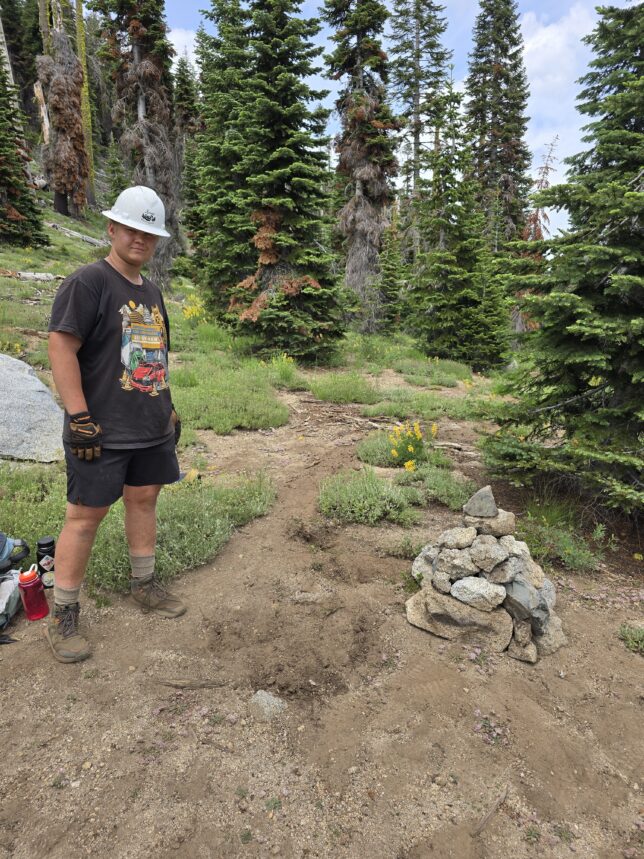
June 25th, breakfast was eaten, lunches were made, and morning fitness was finished. The team headed back up the Tracey Trail to finish where they left off and get the trail open for all. The slog up was real, but everyone made it with the focus on getting some monster Red Firs out of the trail. After a few dozen more trees, the light at the end of the tunnel became real with some minor retreading, rerouting, and de-limbing. A multitude of massive logs were pushed off the trail, creating quite the spectacle for those pushing them. The trail was finally open and the junction finalized with a proper USFS-sized cairn. The team found a spring amongst the hanging meadows near the junction and were able to secure some very cold and inviting water into their bottles before heading back up over the saddle to camp. The team was tired and dirty but ready to take on more. The best part of the day was when the teens started their rhythm of grabbing tools and doing work without direction or being asked; pure dedication coming to fruition, another solid accomplishment. A repeat of relaxing, dinner, and campfire games completed the night.

June 26th, everyone had realized the trip was nearing its end. Conversations drifted toward the simple comforts waiting back home, from favorite meals and soft beds to long showers. The discussion became so detailed it reminded me of a Norman Rockwell Thanksgiving painting. Breakfast scarfed down, lunches made, and the fitness circle completed, the goals were outlined: get the Boulder Creek trail open to the Foster Divide Junction. This trail is rather complicated as it traverses through a heavy burn area and heads down about 800’ to a beautiful and mostly spring-fed creek; Boulder Creek. There were dozens of trees over the trail and even one across the Boulder Lake outlet, which is crossed as part of the trail. After removing over 2 dozen logs on the way down, the team hit 101 total logs over the week, tying them with an adult record set earlier this month. After checking the remaining .2 miles of the trail to the junction, the team found 2 more logs, bringing the weekly total to 103, essentially beating the previous year record set by the teens and the recent adult record. Champions of the trail. The break at the creek was splendid between rain sprinkles and sunny breaks; everyone rejoiced and contemplated the 2-mile uphill slog back to camp. The group departed and headed up to relax, enjoy dinner, and a final night of camaraderie. Games were played, laughs were exchanged, and lives were forever altered in the best sort of way.

June 27th, the final day, the pack out, the end. Everyone woke up a little later that day, and breakfast was a smörgåsbord of what was left; lunch was decided to be unimportant as everyone knew ice cream and sandwiches at UpNorth awaited those who practiced patience. Some impromptu quesadillas were made to keep the bellies full. After packing up the kitchen and all the tents and gear, the team waited for BCHA to arrive. Their arrival was quick and early. We barely had time to weigh the panniers, but everyone was ready to complete the final 2 miles back to the trailhead. Once the packers were satisfied, we were told to head back and wait for the packers at their camp to help with loads and finalize the trip. The hike out was fast; it seemed like 30 minutes at best. Everyone arrived quickly, even the packers. It isn’t often that everything runs smoothly like this, so the arrival back in Weaverville came sooner rather than later. Packs were examined, dismantled, and cleaned, then put away. After the tasks were completed, everyone headed over for sandwiches and ice cream, essentially completing a 7-day trip bringing everything full circle. Shortly after, parents arrived, and the teens faded out one by one, leaving the guides to take that breath, resulting in the sigh of relief that everything worked out perfectly and nobody got hurt; the most important thing.

Volunteers, Partners, and Grant Programs:

Ascend extends its gratitude to our wonderful volunteers, the Backcountry Horsemen of California Shasta-Trinity Unit, and our Forest Service partners at U.S. Forest Service - Shasta-Trinity National Forest who made the project possible, and grants like: Community Foundation of the North State, which helped fund our new-to-us van that we used to shuttle volunteers and gear.

This program is funded by the Outdoor Equity Grants Program created through AB 209 and administered by California State Parks, Office of Grants and Local Services.

The National Forest Foundation works on behalf of the American public to inspire personal and meaningful connections to our National Forests. By directly engaging Americans and leveraging private and public funding, the NFF leads forest conservation efforts and promotes responsible recreation. Each year the NFF restores fish and wildlife habitat, facilitates common ground, plants trees in areas affected by fires, insects and disease and improves recreational opportunities. The NFF believes our National Forests and all they offer are an American treasure and are vital to the health of our communities. Learn more at nationalforests.org.

In accordance with Federal law and U.S. Department of Agriculture policy, this institution is prohibited from discriminating on the basis of race, color, national origin, sex, age, religion, political beliefs, or disability. To file a complaint of discrimination, write USDA, Director, Office of Civil Rights, Room 326-W, Whitten Building, 1400 Independence Avenue, SW, Washington, D.C. 20250-9410 or call (202) 720-5964 (voice and TDD). USDA is an equal opportunity provider and employer.

Ascend Completes First Adult Stewardship Trip of the Season in the Marble Mountains Wilderness

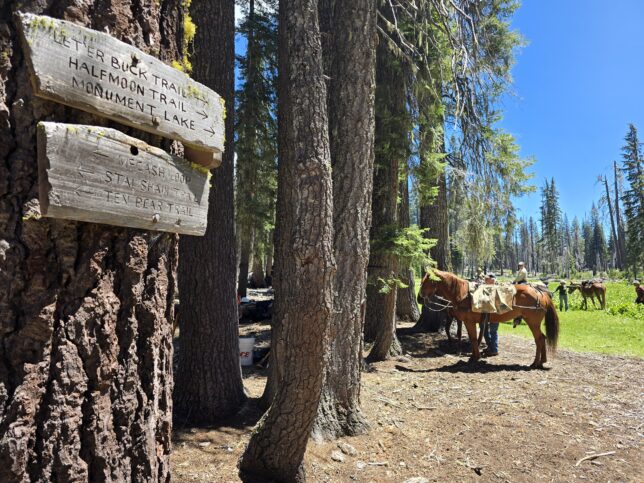
Ascend recently completed its first Adult Stewardship Trip of the year in the Marble Mountains Wilderness, deep within the Klamath National Forest off Highway 96 in Siskiyou County. Through a five-year stewardship agreement with the Six Rivers Ranger District of the U.S. Forest Service, Ascend is helping restore and maintain trails impacted by the McCash Fire. Priority routes include the Haypress, Ten Bear, Stanshaw, Let Er Buck, and McCash Loop trails.

Reaching the project area is an adventure in itself. The drive from Ascend's office takes approximately three to four hours, following the Trinity River to the Klamath River, crossing the Salmon River, and winding through the rugged beauty of Somes Bar before arriving at the trailhead.

The trip began with a spectacular sunset on Saturday evening as volunteers arrived and settled in for the week ahead. On Sunday, packers gathered gear and prepared their mules for the journey into the wilderness. Once the loads were secured, the group set off on foot. The trail to camp winds through open meadows and both burned and unburned forest, offering striking views of recovering landscapes and hidden mountain meadows. At elevations ranging from 4,700 to 5,200 feet, the area hosts tree species more commonly associated with higher elevations, including lodgepole pine, white pine, and mountain hemlock.

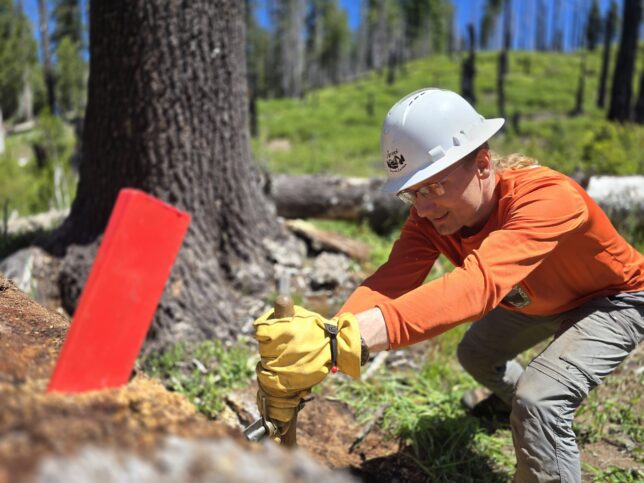
After arriving in camp, volunteers established camp and participated in discussions covering Leave No Trace principles, trail stewardship ethics, and trail work safety. By Monday morning, the crew was ready to begin work on the Ten Bear Trail. Volunteers removed downed trees, retreaded sections of trail, and cleared brush, completing approximately one mile of restoration work and reaching the meadow near the midpoint between the trailhead and the Stanshaw Trail junction. Tools were cached for continued work later in the week.

On Tuesday, the group shifted focus to the McCash Loop Trail, providing a welcome change of pace while two volunteers retrieved cached tools in preparation for work on the Haypress Trail. Significant progress was made reopening the first quarter-mile of the McCash Loop, a trail that required extensive rehabilitation, including log removal, trail reconstruction, brushing, and minor reroutes.

Wednesday brought additional support as two representatives from the Six Rivers Ranger District's Orleans-Salyer Unit joined the crew on the Haypress Trail. Originally, the plan was to restore the trail only as far as the Halfmoon Meadow junction. After evaluating conditions on the ground, Forest Service staff encouraged the crew to continue all the way to Sandy Ridge to improve access for hikers and packers throughout the summer season. The team quickly reached the Halfmoon junction and set its sights on completing the upper section the following day. After work, several volunteers made the climb to Sandy Ridge and were rewarded with sweeping views of the Marble Mountains.

On Thursday, the crew returned to the Haypress Trail and completed restoration work from Halfmoon Junction to the ridgeline. The effort successfully reopened a three-mile stretch of trail between Haypress Meadow and the ridge, significantly improving access through this important corridor.

Friday saw the crew return to the McCash Loop Trail, continuing restoration efforts until time ran out for the day. The milestone of the trip came with the removal of the 100th log, a new Ascend stewardship record. By week's end, approximately 0.6 miles of the McCash Loop, a trail that had not received substantial maintenance in more than a decade, had been reopened through extensive brushing, retreading, rerouting, and log removal. That evening, volunteers split into small teams to remove the final remaining trees obstructing sections of the lower Haypress and Let Er Buck trails, completing both objectives.

On Saturday, packers returned to retrieve gear and assist with breaking camp. Volunteers worked together to load equipment and begin the journey back to the trailhead. As is often the case on wilderness trips, the hike out felt shorter than the drive home. Leaving the backcountry is never easy, but there is always the anticipation of returning home to family, a comfortable bed, and a hot shower.
The trip was a tremendous success. Beyond the measurable accomplishments on the ground, volunteers formed new friendships, shared memorable experiences, and deepened their connection to public land stewardship. Whether seasoned trail workers or first-time volunteers, every participant contributed to something meaningful.

By the end of the week, the crew had:

• Removed a record-setting 102 downed trees

• Completed approximately 2 miles of trail retreading

• Completed approximately 2 miles of brushing

• Reopened critical sections of the Ten Bear, Haypress, Let Er Buck, and McCash Loop Trails

• Improved access throughout a key portion of the McCash Fire footprint

Ascend extends its gratitude to our wonderful volunteers, the Backcountry Horsemen of California - Redwood Unit, and our Forest Service partners at U.S. Forest Service - Six Rivers National Forest, who made the project possible, and grants like: Community Foundation of the North State, which helped fund our new van that we used to shuttle volunteers and gear, and a generous grant from the Outdoor Equity Grants Program. Together, their efforts are helping restore access to some of the most beautiful and remote landscapes in Northern California.

This program is funded by the Outdoor Equity Grants Program, created through AB 209 and administered by California State Parks, Office of Grants and Local Services.

In accordance with Federal law and U.S. Department of Agriculture policy, this institution is prohibited from discriminating on the basis of race, color, national origin, sex, age, or disability. (Not all prohibited bases apply to all programs.)

Stay tuned, the 2026 season is coming in hot!

Everyone has been eagerly waiting, and we’re excited to share that we are in the final stages of confirming details for our 2026 season. This year’s lineup includes two outstanding adult stewardship trips, one in May and another in September, bookending the season. We’re also planning five teen trips, consisting of one weekend program, two five-day trips, and two immersive seven-day experiences. In addition, we have two possible youth trips scheduled, though this opportunity is contingent upon securing the remaining funding.

ADULT TRIPS:

Ascend’s 2026 Adult Backcountry Stewardship season features two immersive, week-long opportunities for volunteers to give back to Northern California’s wilderness while experiencing some of its most remote and spectacular landscapes. Kicking off the season, the May 31–June 6 trip takes place in the Marble Mountain Wilderness along the Haypress Trail and nearby routes, where up to 12 participants will engage in hands-on trail stewardship, including logouts, brush clearing, tread repair, and corridor restoration.

This early-season work helps improve access and long-term sustainability in a rugged backcountry setting. Later in the season, September 5–11, Ascend returns to the Trinity Alps Wilderness for a second stewardship experience in the Poison Canyon trail system. With pack support provided, participants will basecamp at Lily Pad Lake and spend the week working throughout the surrounding cirque in a landscape shaped by fire and recovery. Daily stewardship projects will be balanced with time to enjoy pristine alpine lakes, expansive views, and quiet moments of reflection.

TEEN TRIPS:

Ascend’s 2026 Teen Stewardship and Science season offers a progression of immersive, place-based experiences that engage youth in hands-on conservation, field science, and wilderness leadership across Northern California’s most iconic landscapes. The season begins May 23–25 in the Marble Mountain Wilderness, where 12–15 teens will rehabilitate the Haypress and Stanshaw Trails within the McCash Fire footprint. This work will prepare the trails to stock-passable standards in coordination with Six Rivers National Forest staff and the Bigfoot Trail Alliance, supporting a seamless transition to Ascend’s following adult stewardship efforts on the Haypress Trail.

From June 20–27, a smaller crew of eight teen interns will return to the Trinity Alps Wilderness for a seventh-day immersion focused on the Boulder Lakes Trail System, continuing Ascend’s fourth consecutive year of post–River Complex Fire trail restoration. This work is part of a coordinated, multi-year approach that pairs teen crews with adult volunteer stewardship trips to address long-term fire impacts in this heavily used wilderness area.

In July, the focus shifts from tools to science. From July 6–10, twelve teens will participate in a field science immersion in the Scott Mountain area of the Shasta-Trinity and Klamath National Forests, working alongside California Department of Fish and Wildlife and regional scientists. Teens will assist with amphibian recovery actions for Cascades Frogs and Long-toed Salamanders, invasive fish removal, aquatic hexapodal and cryptogam studies, and terrestrial arthropod surveys, gaining hands-on experience in applied conservation research.

Stewardship returns to the Marble Mountain Wilderness July 27–31, where twelve teen stewards will focus on post-fire trail repair and drainage improvements to protect fragile soils, support natural regeneration, and maintain safe wilderness access. This trip is directed by U.S. Forest Service leadership and facilitated in partnership with the Bigfoot Trail Alliance and SWRC’s Youth Environmental Summer Stewardship (YESS) interns, fostering cross-community connections among youth in the Klamath Mountains.

The season culminates August 3–9 with a 7-day Stoddard/Doe Lakes Packers Trip, where teens will gain hands-on experience working with pack animals while completing trail maintenance and campsite restoration in remote backcountry settings. Participants will learn animal care, packing techniques, wilderness travel, and trail etiquette, while building teamwork, stewardship skills, and a deeper understanding of how pack animals support access and care for public lands.

YOUTH TRIPS:

Stay tuned for more information on our upcoming two youth trips. The first potential trip will be for ages 10-12, July 9-13. The second trip will be for ages 12-14, July 20-24. The youth trips are contingent on funding being approved this Spring.

Thank you for your continued support

As we approach the giving season, we invite you to consider supporting Ascend Wilderness Experience with a donation. Your generous contribution will help us execute our summer programs in, providing youth, teens, and adults throughout the region with the opportunity to explore and connect with the wilderness.

In addition to supporting our life-changing outdoor programs, your donation will also help fund our ongoing trail stewardship efforts and a community gear library located at our Weaverville office. These initiatives ensure that people of all ages can enjoy and access our beautiful local trails for years to come. Whether through backpacking trips, outdoor education, or conservation work, your support makes a lasting impact on both individuals and the land.

Thank you for considering a donation to Ascend this season. Together, we can continue to inspire and protect the wild places we cherish.